Thursday, May 26, 2011

Highlife and beyond

Lead Image

In his interview with Osaze Iyamu, Ambrose Campbell identified the instrumentation of early juju music as “tambourine, a guitar and small sekere (gourd rattle),” and the location of the music as “palm wine (tombo) bars.” The style of guitar playing in these bars in Nigeria, Ghana, Sierra Leone and Liberia was naturally called palm-wine guitar music and it was out of this genre that highlife variations developed in these West African countries.
That highlife had become the overwhelming contemporary popular music of Nigeria by the 1950s is a fact. I.K. Dairo’s Blue Spots’ electrified juju music was very popular in the ‘50s, yet juju music was never as popular as highlife, which had saturated the capital, Lagos. The Civil War made the top highlife bands, led by Easterners, relocate from Lagos or disband, and in the interim there was a rebirth in the popularity, spread and sound of juju music.
Guitar-driven highlife
It is instructive that the guitar became a very prominent voice in the hybrid genres of popular music that evolved out of highlife music, which took a dive in popularity and live performance. These are nkwokrikwo, in the east, and juju. in the west. Then, of course, there were the genres of AfroSoul as pioneered by Orlando Julius, Afrobeat as structured by Fela, and AfroJazz as fashioned by Peter King, which also had deep roots in highlife, though none of the three are guitar-driven. Fela led a highlife band in his school days in London, had a stint playing with Ambrose Campbell, and his first band in Nigeria, Koola Lobitos, fused highlife with jazz. Peter King’s long stay in Europe as a professional music was well-documented on recordings that featured a lot of jazz-highlife hits like “Iya Lajole”, “Jojolo”, “Omo Lewa” and more recently “Higher-life”, on his ‘Palmwine Vendor’ CD released in Nigeria.
However, highlife at its peak and on its way to decline wasn’t just about the major stars like Olaiya, Arinze, Lawson, Ukwu and Uwaifo. Like Steve Rhodes had incisively observed, “When you heard a highlife song you could tell where it came from. Olaiya’s sound was different from Arinze’s strong rhythms. Henshaw-Efik, Uwaifo-Edo, Roy Chicago, Olaiya-Yoruba, Rex Lawson-Rivers pots, all drew from the wellsprings of their own areas. They created Nigerian music with character!”
It was only natural then for these major highlife musicians to inspire other musicians from their similar cultural backgrounds to search for other peculiar rhythms from the same cultural and ethnic sources, to brand their own versions of highlife and its hybrids. Two good examples of this trend are the pre- and post-Uwaifo flavours of highlife that employ Bini/Edo/Esan rhythms as in the music of Osayomore Joseph, Chief Osula, General Boliva, Actor Alili, Akaza and many others. Out of Rex Lawson’s successful experiments in incorporating Ijaw masquerade rhythms into his highlife came further variations on the same theme in the total-rhythm-galore approach of Owigiri music as fashioned by Belemo and a new generation of core-Ijaw musicians from the ‘new’ Bayelsa State.
Highlife, as it undertook a journey of musical transformation towards AfroSoul and Afrobeat, had remarkable input from Chris Ajilo and, after Orlando Julius and Fela, Segun Bucknor, Demos Deniran and his Lukurigi, Blackman Akeeb Kareem and Joni Haastrup and Monomono (“Give the Beggar a Chance”); who, as from the Clusters, were reaching out towards the AfroPop genre of the ‘70s. Sonny Okosun, who played with Uwaifo as a guitarist, is a lifeline in his incorporation of Ijaw Ozzidi rhythms into his unique brand of internationally popular Nigerian music that later veered towards pop-highlife-reggae with monster hits like “Papa’s Land”.
Great Highlife Party
There were laudable and culturally nostalgic projects to rejuvenate highlife. One such important project spearheaded by the then-director of the Goethe Institut, Renate Albertsen-Marton, and ably assisted by Benson Idonije and Jahman Anikulapo, was the 2000 Great Highlife Party. It brought E.C. Arinze back to Lagos as well as Owerri-based Ralph Amarabem of Rex Lawson and the Peacocks fame. Out of this eventually came the monthly Great Highlife Party sessions organised by Benson Idonije and the Committee for Relevant Art, hosted at Ojez Nightclub. In spite of incorporating an Elders’ Forum and the celebration of landmark birthdays of distinguished Nigerian writers, artists and actors, the Great Highlife Party project was not able to reestablish highlife as Nigeria’s premier contemporary sound.
While the post-Civil War years witnessed the gestation and strengthening of new guitar-driven popular music forms like nkwokrikwo and juju music, the influences of American soul music and the British Beatles’ pop music domination of global popular music had a profound impact on the younger generation of Nigerian musicians. They, to their professional credit, went on to create the golden age of Nigeria’s AfroPop genre of contemporary popular music.
Steve Rhodes, naturally, is not too kind to this generation of young Nigerian musicians. “Then came the era of copycats,” Rhodes says. “Nigerians wanted to be Wilson Pickett or James Brown. All of a sudden the level of creativity dropped. This period went on for too long, including the reggae influence. It was very sad as if all the musical creativity in Nigeria had dried up and our musicians became lazy.”
Juju and Nkwokrikwo
The two genres that strove to rekindle the energy and original creativity of highlife came to the fore before, during and after this western pop influence on Nigeria’s contemporary popular music. They both have clear similarities. Juju music dominated the Lagos-Western Region axis as from the mid ‘60s and, unlike the earlier electrified accordion-led version of I.K. Dairo, the superstars of the new juju boom were guitarists Ebenezer Obey and Sunny Ade. Juju bands were essentially a throwback to guitar bands with indigenous percussion. Interestingly, the juju pioneers of the ‘30s and ‘40s were string-instrument players; mandolin player Tunde King; banjoist Ojoge Daniels and guitarist Ayinde Bakare.
Before he formed his own band in 1964, Ebenezer Obey had played with guitarist Fatai Rolling Dollar’s band. At the height of the Civil War in 1970, his band was renamed Chief Commander Ebenezer Obey and the Interreformers Band and by now, with Sunny Ade, his younger rival, juju music became the social music of ostentation/owambe parties. Sunny Ade’s African beats, in addition to guitars and traditional percussion, introduced the vibraphone, Hawaiian guitar and the Moog synthesizer to juju music. Ade flirted with Afrobeat and even reggae and his Syncro-system sound was juju at its most modern. At the peak of the boom there must have been about 100 juju bands, including Oladunni Oduguwa alias Mummy Juju and her Decency and Unity Orchestra.
Juju, a social music characterised by praise singing and lessons in moral righteousness sometimes seemed oblivious of copyright implications as juju musicians incorporated liberal snatches of popular global hits and even nursery rhymes into their recordings and stage performances.
As from the ‘50s, it was a daily recreational pastime in Eastern Nigeria to listen to Congo/Brazzaville radio stations in the early hours even though listeners did not understand the French and Lingala of the DJs and musicians. The music of O.K. Jazz and others were the rave. Naturally, this multiple guitar-driven Congolese popular music formed a counterpart to the Camerounian border to Igbo heartland. Generally referred to as nkwokrikwo, it’s about twanging, virtuoso guitar playing and boisterous rhythms. Paulson Kalu’s Africana from Aba; ace guitarist Dan Satch Opara and vocalist Warrior of the Owerri-based Oriental Brothers; and Osita Osadebe’s The Sound Makers from which emerged The Ikengas, were the stars of this genre.
The superstar remains Nicholas Mbarga aka Prince Nico, a half Nigerian and Camerounian whose blend of the Congo beat and highlife created the world super hit ‘Sweet Mother’, and his Rokafil Jazz. Yet perhaps the most accomplished guitarist in this genre has been Oliver de Coque and his Ogene Sound.
Areme-007

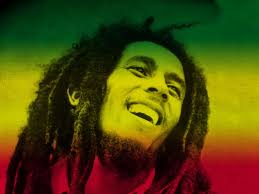
Bob Marley and emancipation from mental slavery


On May 11, it has been 30 years since Bob Marley joined the ancestors. Bob Marley was a cultural artist who became internationally known as a defender of love, freedom and emancipation. This week we remember him, his songs and his contributions to both revolutionary consciousness and his call for us to emancipate ourselves from mental slavery.
Bob Marley from the Jamaican countryside
Robert Nesta Marley was born in the rural areas in the island of Jamaica in February 1945. Jamaica was one of the slaveholding territories of British imperialism. The history of rebellions among the enslaved informed the consciousness of the peoples of this island to the point where its name has grown beyond its size as a small island with less than 3 million people.
Bob Marley was the product of an interracial relationship between an English military person, Norman Marley, a captain in the colonial army and overseer and an African woman, Cedilla Booker, from Jamaica. Marley identified with Africa and broke away from the long tradition of mixed-race persons who denied their African heritage. Bob Marley spent his early years in the lush countryside of St Ann, but moved with his mother to Kingston while still in his early teens.
He grew up in Trench Town among the most oppressed sections of the working class districts of Kingston and was influenced by the Rastafari movement. His formal education came from the Rastafari, who developed independent bases for educating the people so that they could escape "brainwash education." From the Caribbean, this movement has spread to all parts of the world. Bob Marley was one of the most articulate spokesperson for this movement.
Marley's career as a cultural artist started in 1961 and by 1964 he had teamed up with Neville Livingston (Bunny Wailer) and Winston McIntosh (Peter Tosh) to form the Wailing Wailers. As a youth I grew up listening to the lyrics of the Wailers and witnessed their transition from rude boys pushing the culture of defiance (in the music of ska and rock steady) to Rastafari spokespersons articulating a different version of peace and love.
The fact that this movement had extended itself to embrace a king in Ethiopia reflected the traditions of the colonial society. Many were critical that the Rastas held defensively unto the Ethiopian monarch Haile Selassie. There were those intellectuals such as Orlando Patterson who called them escapists and millenarian. But these writers and intellectuals never said why Caribbean peoples who claimed a European king and queen as the head of state were normal but those who called for an African king were escapists.
Bob Marley, Peter Tosh, and Bunny Wailer came from the ranks of the oppressed youth and soared to great heights internationally. Together they had formed Tuff Gong Label in 1970, which marked a turning point in their career. Soon, the Wailers' reputation spread outside Jamaica after they began to tour Europe and the USA. After the breakdown of the group in 1974, Bob Marley formed his own group, Bob Marley and the Wailers. Bob Marley was backed up by three of the most gifted female artists in Jamaica: Marcia Griffiths, Rita Marley and Judy Mowatt.
From 1974 to 1981, Marley became a world leader for truth and justice. He did not allow individual fame to detract from the message of the music.
The inspiration of Marley and his reggae philosophy
Bob Marley was one of the most articulate spokespersons for peace, love and justice. In the past thirty years, the literature and writings on the philosophy of Bob Marley have served to shed more light on the role of music and song as a mobilising force in society. His songs of love and inspiration are now enjoyed in all parts of the world, breaking language and racial barriers.
It is now acknowledged on all continents that Bob Marley was one of the most influential musicians of all time. His performance at the Zimbabwe Independence Celebrations in April 1980 sent the message to the apartheid rulers that oppression would not stand. Within South Africa, Lucky Dube deepened a brand of progressive reggae so that today in all parts of the world there are reggae groups placing their own stamp on this culture of resistance. In 1999, Time magazine dubbed Bob Marley and the Wailers' Exodus the greatest album of the 20th Century, while the BBC named One Love the song of the millennium.
The hypocrisy of the British knew no bounds: the same British imperialists who celebrated the song, "One Love", as the song of the millennium, were the same downpressors that unleashed police to arrest and harass young persons who identified with the Rastafari movement. Bourgeois intellectuals in Britain continue to criminalise youths who identify with Bob Marley, stating that these youths belong to a "criminal subculture."
Yet, it is the Rastafari reggae song and the positive musical healers from among the Rastafari who continue to inspire young people to stand up to defend their humanity in the face of the massive push to turn young people into mindless consumers and gadgets without a care for the world in which they live. These youths listen to Peter Tosh who wailed, "everyone is talking about crime, but who are the criminals?"
The progressive wing of the Rastafari movement continues to challenge young people in the capitalist centers to oppose the current social order that is "dominated by the relentless privatising and commodification of everyday life and the elimination of critical public spheres where critical thought, dialogue, and exchange take place."
One of the songs that continues to be played in all parts of the world is, "Get up, Stand up (Stand Up For Your Rights)". Bob Marley was aware that there could be no peace in a world of injustice and brutal exploitation.
It takes a revolution to make a solution
Though Bob Marley transitioned on May 11, 1981, when he was thirty-six years old, today we can hear the music of reggae in different languages around the world. Today, as revolutionary upheavals shake Africa and the Middle East, young rebels listen to the lyrics of Bob Marley as they instill in themselves the confidence to stand up for their rights. In Tunisia and Egypt, homegrown reggae artists were parts of the revolutionary process which is still unfolding.
Tunisian youths played reggae music and other songs, calling on the soldiers, "Don't shoot the people." Clearly, in the revolution, one of the tools was progressive hip-hop and reggae. The music of Lion Revolution used symbols popularised by Bob Marley to rally the youths of Tunisia to stand up and fight.
Marley had emerged as a Caribbean revolutionary who wailed to promote the spirit of love as the basis for revolution. The revolutionary Che Guevara had clearly stated that, "At the risk of sounding ridiculous, let me say that the true revolutionary is guided by feelings of love." It is this revolutionary love that informs the philosophy of Rastafari, and their principles of peace and love could be discerned in the present international revolutionary pressures. Wherever one goes, young people instinctively turn to "One Love" to express group solidarity.
It is to this song, "One Love", we have to turn from time to time to cope with the challenges of "Babylonian provocation."
Over the years, I have written on the electric presentation of Bob Marley at the independence celebrations in Zimbabwe in 1980. Such was the power and force of the music that hundreds of thousands of Zimbabweans flocked to the stadium that night to turn the independence celebrations into a people's celebration. Because many people could not get into this official celebration, Bob gave a free concert the next night at the Rufaro stadium in Harare and pledged that the music of reggae was now at the gates of apartheid South Africa and that the task of the reggae artists was to continue the fight, just as Peter Tosh had sung, "We have to fight, fight against apartheid."
In his small newspaper called Survival, which was published from the Hope Road Headquarters in Kingston, Jamaica, Marley had this to say in 1980:
"I and I make our contribution to the freedom of Zimbabwe. When we say natty going to dub it up in Zimbabwe, that's exactly what we mean, give the people of Zimbabwe what they want, now they got what they want, do we want more? Yes, the freedom of South Africa. So Africa Unite, Unite, Unite. You're so right and let's do it."
Reggae and revolution
In any revolutionary process, one of the most important tasks is for the people to recover their self confidence in order to make history. Rastafari imbued confidence in the peoples of the Caribbean, and it was this same self confidence and self esteem that underpinned the spirit of resistance among the Rastafaris from the hills of Jamaica to the streets of Zimbabwe.
In his song, "Africans a-liberate Zimbabwe", Marley prophetically predicted, "Soon we would find out who are the true revolutionaries." Robert Mugabe and his clique exposed themselves soon after independence, when the Zimbabwe government attacked the Rastafari movement in Zimbabwe, castigating Rastas for nor dressing "properly" because they did not wear British suits like the leaders.
Mugabe called the Rastas "dirty" and "unwashed," but this was the first sign of a regime that attacked women, same sex persons and those who opposed the self-enrichment of a small clique. Many Rastas are now listening to the words of Bob Marley who in the song "Ride Natty Ride" call on politicians to pull their own weight and stop making speeches to confuse and oppress the people.
The Caribbean reggae lyrics of confidence and personal dignity continue to spread as people gear themselves for today's revolutionary moment in world history. As one of the commentators on the Egyptian revolution stated, "What the revolution offered the people was the opportunity to restore their sense of self-esteem, honor and dignity. Once the fear barrier was knocked down, they acquired a new sense of pride and empowerment that not only challenged the state monopoly on violence but also defeated it using solely peaceful means. With each passing day they became more determined to fight for their rights and quite willing to tender the sacrifices needed to gain their freedom."
Bob Marley articulated the need for radical revolutionary change and he dug deep into black life to grasp what C.L.R. James had understood, that black people formed a revolutionary force in world politics because of where they had been located in the system since the Atlantic Slave Trade. The task of the revolutionary artist and revolutionary intellectual was to unearth the revolutionary potential of the people. This Bob Marley consciously sought to do through his music and concerts. In his last years, his concerts were like giant political rallies.
Of his many renditions about emancipatory politics and the emancipation of the mind, Marley turned to religious language and images to reach a section of the population that is not usually reached by traditional radical discourses on revolution. Those who study wave theory and the physics of music are examining the lyrics and vibrations of the music produced by Bob Marley and reggae artists to see how this art form and spiritual message emerged as a revolutionary form. They are studying the real meaning of Rasta Vibrations. Today, these vibrations are helping to inspire revolutionaries as they remember the words of Bob Marley: "It takes a revolution to make a solution."
Pan Africanist Marley and African unity
Bob Marley was very conscious that the African revolution and African unity were inseparable. In February 2005 at the moment of his posthumous 60th birthday celebration, Rita Marley and other members of his family organised the massive African Unity concerts in Addis Ababa, Ethiopia. Members of the Marley family were reminding the youth that long before Colonel Muammar Gaddafi claimed to have supported African unity, Marcus Garvey, Kwame Nkrumah, and Bob Marley were supporting the full unification of Africa. In all parts of Africa the people sing the song of Bob Marley, "Africans Unite".
This call for African unity from the grassroots is as urgent today as it was 31 years ago when Bob Marley uttered these words of unity from the stage in Harare. Marley had joined his voice to the push for the full liberation of Africa. He understood that no black person could be free until Africa was free, united and liberated from foreign domination and military interventions.
In the last year of his earthly life, Bob Marley worked hard to unearth spiritual energies to make the people stronger. In his growing awareness of his own mortality, Bob Marley intensified his work and pushed himself to the point where he collapsed in his final concert. Bob Marley was suffering from cancer. This suffering showed him that he only had a short time on earth.
Today, Bob Marley is larger in death than when he was alive but as we remember him, we must remember him as a human with strength and weaknesses. We now know more of these weaknesses and Marley himself communicated his pain and hurt in his songs. It is this same pain and hurt that infused his songs that connected him with other persons going through similar pain. Despite the weaknesses and the pain, Marley stressed the positive and as we remember him, we seek to highlight the positive while learning from the negative.
In the last album, appropriately called ‘Uprisings', Marley reminded the people that they should "have no fear of atomic energy for none of them can stop the time." The song, "Redemption Song", exposed the versatility of Marley when he returned to strumming the guitar and asked simply, "How long shall they kill our prophets while we stand aside and look?" This was where Marley called on the people to "Emancipate yourselves from mental slavery, none but ourselves can free our minds."
This theme of self-emancipation sought to bring the fusion of the ideas of spirituality with the revolutionary changes in the material and technical conditions of production. Reggae music was an early attempt at this fusion in order to provide emancipation from mental slavery so that humans could unleash the latent power of self-expression. In essence, when the Rastafari and Bob Marley called on us to "emancipate ourselves from mental slavery," they are admonishing the intellectuals and the activists to make a break with the epistemologies that justify and cover up oppression.
Thus, Marley's call for emancipation from mental slavery also speaks to all humans seeking alternatives to the massive push towards mind control and robotization that is promised in the era of technological singularity, where human beings would be rendered inferior to super-humans who would be products of biology, genetic engineering, and robotic science. In such a climate, the Rastafarian movement and the humanist philosophy of Marley promise to act as a force to hold the youth together as humans.
Bob Marley opposed conspicuous consumption and the obscene accumulation of wealth. Up to the time of his passing there were efforts to make him succumb to the disposition of his material wealth, but he eschewed the capitalist forms of inheritance. One witnessed court cases and long litigation because of his opposition to capitalist wills.
Thus, even on his bed while he was making the transition to the ancestors, Bob Marley was opposed to the obscene consumptive patterns of the capitalist mode of production and railed against the forms of economic organisation that placed material goods before human needs.
My work on the Rastafari movement in the book ‘Rasta and Resistance' was an attempt to learn from the positive traditions of this movement to be able to inspire the youth to the long struggles for freedom. This was an attempt at trying to lay the foundations for the move from resistance to transformation. This attempt remains premature, for such a transformation will only be possible when there is the harmonisation of the culture and language of the majority with that which is taught in the schools, colleges and universities in the region.
The Egyptian revolution of 2011 has opened new possibilities at the political level. As we remember Bob Marley, revolutionaries will seek his inspiration to push for a quantum leap beyond the world of capitalist oppression, dehumanisation, and injustice. Most importantly, in order to move from resistance to transformation and achieve the quantum leap that takes us beyond the world of exploitation and dehumanisation, we must ultimately emancipate ourselves from mental slavery, and from the capitalist forces that celebrate genocide, subjugation, military invasions, environmental plunder, and crimes against humanity as progress.
Campbell is a Professor of African American Studies and Political Science at Syracuse University in Syracuse, New York
Areme-007

American embassy hosts Nike Davies-Okundaye

Lead Image

Textile artist and painter Nike Davies-Okundaye will be hosted by the American embassy today as part of activities marking her 60th birthday.
The renowned artist clocked 60 on Monday, May 23, and hosted friends and journalists at a quiet celebration held at her expansive gallery in Lekki, Lagos.
“I am very happy that God has brought me this far and I want to use this opportunity to thank everyone that has been there through the years. I have celebrated my birthdays in different countries but this year, I have decided to celebrate it in Nigeria. I was meant to be in Ethiopia for a leadership conference where I was to be recognised, but since I wanted to celebrate in Nigeria, I was determined to enjoy this period with friends and family. So I decided to send my daughter to represent me,” she disclosed at the event.
The artist who has run the Nike Centre for Art since 1983 also used the occasion to encourage young people to develop new skills. She advised them to be dedicated and hardworking because it is the way to go.
The American Wives Association held a private dinner in her honour yesterday while artist Kathleen Stafford will hold an exhibition at the Nike Centre for Art in early June. A cultural fiesta which date is yet to be announced is also in the pipeline.
Okundaye is a textile artist who has developed a unique style of batik making over the years. She has taught the technique in different parts of the world and has trained over 3000 girls at her art centres in Osogbo, Lagos, Kogi and Abuja. She is a recipient of numerous awards and has participated in over 102 solo exhibitions and 36 group art exhibitions.
Areme-007

SOLA SOBOWALE RETURNS WITH JAGUNMOLU


Movie lovers are in for a good time once again. Reason? Toyin Tomato is in town. She recently flew in from the UK to do what she knows how to do best.
The screen goddess is ready to hit the screen once more. Sola Sobowale who came in after a break from the film industry told E24-7 that she is back for good.
The seasoned actress who has various flicks to her credit including ‘Ohun Oko Somi da’, ‘Agbara Obirin‘ amongst others is planning to release another hit titled ‘Jagunmolu’.
‘Jagunmolu’, according to her, the movie is about power tussle among brothers and nations.
Toyin Tomato, as she is fondly called by her loving fans, confessed that she had to stay put in London to take care of her children and safeguard her own future, just as she told E24-7 magazine in an earlier interview.  
Areme-007

Sean Tero Drinks To Stupor, Fights Club Waiter


Charity begins at home. This should have been the watchword for this Naija sensational artiste who calls himself chokomaster.
Seam Tero, his real name, was embarrassed at the Maltinos Club, Ikeja penultimate week when he stood on one of the VIP couches in the club having drunk to stupor, the act the management of the club frowns at.
This action immediately caught the attention of one of the waiters who told him with high sense of humility to sit properly but being who he’s, he did not oblige since he was under the influence of the White Vodak and Red label readily displayed in front of him.
The waiter later got irritated and forced him to behave or leave the club since he had prefer standing on the well arranged couch to sitting like a gentleman or be dancing like every other night crawler. Sean Tero’s girlfriend who accompanied him to the club felt so embarrassed by her boyfriend’s silly act but couldn’t help the situation than to leave him in the club.
After Sean Tero was dragged out, it now occurred to him the gravity of his offence. I guess this wouldn’t have gone down well with the singer the next morning when his attitude at the cub was narrated to him.
If you recall that Ikechukwu also wrestle a bouncer at the Rehab club when he was drunk and wasn’t allowed into the club for the MAMA after party.
Areme-007

Wednesday, May 25, 2011

Lawsuit over Hangover: Part II

BIG BUDGET: According to sources who attended the hearing, the Warners executives said that the studio has spent roughly US$80 million (NZ$100 million) on marketing the Hangover: Part II.

How seriously is Warner Bros taking the lawsuit by Mike Tyson's Maori-inspired tattoo artist that threatens to halt this week's release of The Hangover: Part II?
The studio dispatched two of its top executives to St Louis to testify during a four-hour federal court hearing on whether a judge will issue an injunction preventing the planned Thursday rollout of the highly anticipated comedy sequel.
Warners president of worldwide marketing Sue Kroll and president of domestic distribution Dan Fellman both took the stand in St Louis federal court where S Victor Whitmill is seeking an injunction on the grounds that the facial tattoo worn in the film by Ed Helms violates a copyright on the original work Whitmill created for Tyson.
Whitmill's approach action has already drawn the ire of Maori tattoo artists.
Artist and art director Inia Taylor, who designed tattoos for the Once Were Warriors actors, said earlier this month, when news of the case first surfaced, that he did not think traditional Maori tattoos should not be imitated.
Moko artist Thomas Clark said he did not mind Americans designing Maori-styled tattoos, but drew the line at the traditional moko. He viewed Tyson's tattoo as tribal rather than Maori.
According to sources who attended the hearing, the Warners executives told the court that the studio has spent roughly US$80 million (NZ$100 million) on marketing the sequel to 2009's The Hangover and that blocking the film's debut in cinemas would cause irreparable financial harm. Also, thousands of cinemas are in the process of receiving the film.
Whitmill, who designed the tattoo on Tyson's face, filed his suit on April 28 claiming copyright infringement and asking for an injunction. Whitmill was the sole witness in support of his case at Monday's hearing before US District Court Judge Catherine D Perry.
In court filings, Warners said Whitmill would not be able to succeed on the merits of his claims.
"The very copyrightability of tattoos is a novel issue," the Warner Bros brief said. "There is no legal precedent for plaintiff's radical claim that he is entitled, under the Copyright Act, to control the use of a tattoo that he created on the face of another human being."
Warner Bros said that Tyson's tattoo was ubiquitous and that he appeared in the first Hangover movie without objection from Whitmill. Tyson also appears in the second film but is not a defendant.
You can see the 

Trailer: The Hangover Part II

http://www.stuff.co.nz/entertainment/film/5050545/Lawsuit-over-Hangover-Part-II

Perry was expected to issue a ruling on the injunction Tuesday morning.
Areme-007

Rhian Sheehan's not standing around

rhian

Rhian Sheehan is well known for the soundtracks he has created for film, television and even a presentation shown in planetariums around the world. 
But now the shoe is on the other foot with the musician focused on a film that was built around his own 2009 album, Standing in Silence.
The show, first performed in Wellington last year, is travelling to Auckland for only its third outing on May 28.
Known for his audio opulence, performing Standing In Silence is Sheehan's way of combining sounds and visual elements.
Fifteen contemporary, classical and electronic musicians create a musical backdrop to a series of moving images shot all over the world especially for the show.
He says there was almost no other way to present the album the way it was intended.
"The album is quite ambient and filmic sounding, so it really needed something to help convey the music to the audience."
And it was a photo Sheehan himself took by chance in India that sparked the idea for the whole production.
"It's a chap standing on a hill contemplating something.  And that was the catalyst that sparked off the music when I got back to New Zealand, it set everything off.  I don't know why, but the title of the album and the music, everything stemmed from it."
The musician has been working alongside film maker Gareth Moon to develop the perfect visual realisation of his ambient album.
"I definitely play a hand in the visuals.  A lot of the footage was shot in places that I've already been and a lot of the album has environmental recordings, so we had a rough idea of what we wanted to do.
"We've shot footage, film elements for the show all throughout Asia, Japan, China and India and he's in Europe at the moment, filming some more content."
While Sheehan had an idea of what he wanted out of the project, he says initially it was a tricky thing to get his head around.
"To take the sound and the sonic and turn it into a live show was very difficult to start with, but now that we've worked it out, I'm really excited about it.  It used to be daunting, but now it's not so."
And with things like wine glasses helping to create the sonic soundscape, Sheehan says there will be things to surprise even the most seasoned of concert goers.
But most of all, he hopes audiences will be touched by the entire show.
"We even have little music boxes that we play live, all mic'd up and I can't imagine many people would have seen that. But really, I guess it's just a show to sit back and relax and contemplate your own existence really.
"And hopefully we can move people."
Areme-007

THE MIRROR BOY” HIT UK CINEMAS!


Award-winning Nollywood movie THE MIRROR BOY today announced details of a historic deal secured with ODEON cinemas to release the film across selected UK cinemas. The exclusive deal will see The Mirror Boy shown in 10 specially selected cinemas in cities including London, Birmingham, Liverpool and Manchester from Friday, June 10.


The Mirror Boy (cert 12A tbc) is a family adventure written and directed by The Nollywood Factory’s OBI EMELONYE and produced by OH FILMS’ PATRICK CAMPBELL. The movie has already made history earlier this year when it hosted the biggest UK premiere of an African film at the world famous Empire Leicester Square and attracting massive support from the public, celebrities and media titles across the globe.
The Mirror Boy features two of Nollywood’s megastars GENEVIEVE NNAJI (The Last Party, Ije) and OSITA IHEME (‘Pawpaw’ of Aki & Pawpaw, Mr Ibu) and is supported with thrilling performances by Gambian star FATIMA JABBE and young British actor EDWARD KAGUTUZI who makes his film debut in the movie. The Mirror Boy tells a compelling and uplifting story of a young British born African teenage boy named Tijan [Kagutuzi] who is taken back to The Gambia – the birth land of his mother Teema [Nnaji]. Once in The Gambia Tijan gets mysteriously lost in a crowded street market after witnessing a strange apparition. He then embarks on a magical journey that teaches him about himself and the mystery of the father he has never met.
Shot in the truly beautiful terrain of the Republic of The Gambia by the multi-award winning DOP Clive Norman and boasting high quality production values, The Mirror Boy is said by many in the international film business to be the Nollywood movie that can finally match its industry’s new found global status. This was illustrated at the recent Monaco Charity Film Festival where actress Genevieve Nnaji was awarded the Best Breakthrough Performance (female) for her role in The Mirror Boy earlier this month.
Nigerian cinema – popularly known as ‘Nollywood’ is Africa’s largest movie industry both in value and the number of movies produced per year. Nollywood is the worlds second largest producer of movies after Bollywood and is the No.1 cinema art form across Africa and the global African Diaspora with millions of fans worldwide. It was in 2010 that the world finally became aware of the enormous growth in the flourishing Nigerian film industry which now is a $250m movie industry, churning out some 1500 films for the home movie market each year.
RUPERT STEVENS, Senior Film Booker Odeon Cinemas commented; “Odeon are proud to be the exclusive exhibitors of the first Nollywood film to have a UK cinema release. Having hosted a number of glamorous premieres and screenings in some of our London cinemas, this release marks a significant step forward for the Nollywood and African film Industry and one that we are happy to be associated with. We do hope this release is the first of many as we are confident a market exists for this kind of product. This is in line with delivering on our mission statement ‘Redefining Cinema’ by providing choice for our guests”.
OBI EMELONYE, writer and director said; “The cinema release of The Mirror Boy by Odeon cinemas represents a unique opportunity for African cinema. Today we call on the community to rise up and support the film by spreading the word and buying tickets for friends and family. Without this much needed support, the door that finally opens Nollywood to the world, may be firmly shut and that would be a massive shame,”
The Mirror Boy is a production of THE NOLLYWOOD FACTORY and OH FILMS. OH FILMS the film arm of OH TV (Sky 199), the UK’s fastest growing TV channel for African Caribbean audience. OH Films was founded with a mission to make smart inspirational and commercial films and documentaries for a global audience. Its films have attracted world-class talent including Oscar winning composer AR Rahman (Slumdog Millionaire) and Grammy Award winning singer Kirk Franklin.
Producer PATRICK CAMPBELL of OH FILMS added; “Today we invite everyone to join us on this journey to not only make The Mirror Boy the number one Nollywood movie in the UK but also to support a movement that is bigger than this film. The power is in the hands of the people.”
The Mirror Boy will be shown in the following Odeon cinemas across the UK from Friday 10th June 2011;
· BIRMINGHAM
· DUDLEY
· GREENWICH
· LEE VALLEY
· LIVERPOOL
· MANCHESTER
· MILTON KEYNES
· STREATHAM
· SURREY QUAYS
· WEST THURROCK
Advance tickets for The Mirror Boy are available to pre-book from the listed Odeon cinemas online www.odeon.co.uk or by calling the booking hotline on 0871 22 44 007
ARE YOU READY FOR THE JOURNEY?
Areme-007

Broadway Spider-Man Violations For ‘Turn Off Dark’ Musical

Broadway Spider-Man Violations

Broadway Spider-Man Violations. The Broadway musical Spider-Man: Turn Off The Dark was hit with safety violations. The New York State Department investigated the accidents that involved an actor falling more than 20 feet during the show.
Two other performers sustaining injuries while rehearsing a sling-shot technique, a state official familiar with the violations said Saturday.
The official, who spoke on condition of anonymity because the state agency had not authorized public release of the findings, said that no financial penalties had been levied.
Instead, the musical’s producers are required to continue following safety protocols that were put in place in December after Christopher Tierney, one of several actors who played Spider-Man, fell from a platform into a basement beneath the stage and broke four ribs, a shoulder blade, fractured three vertebrae and suffered a hairline skull fracture. Tierney is undergoing physical rehabilitation.
State safety officials would perform unannounced inspections of the production for the foreseeable future, as they had this winter, the official said. If any safety measure was not followed, the official added, the inspectors were authorized to withdraw variances issued last year allowing aerial sequences of actors playing Spider-Man and the villains Green Goblin and Arachne flying over the audience.
None of the accidents cited in the violations involved sequences in which actors flew over audience members, but rather happened on stage. The sling-shot technique, which catapults performers from the back of the stage to its lip, caused one performer to break both of his wrists and another to injure his feet
Areme-007

Lykke Li: The pop singer who doesn't watch TV


NEW YORK – Lykke Li is sitting in a TV studio, preparing for an interview, when she catches herself on the TV monitor.
"It's so weird," she says, looking at herself. "Like, you see everything.
"I think I become a bit self-conscious," she continues with a light laugh.
The TV is turned off.
It's one of the few times the Swedish-born singer has seen herself onscreen. She doesn't own a TV, and while her music has been featured in TV shows like "Glee" and movies like "Twilight," she hasn't seen much of it.
But that's just how Li is.
"You just let the music go out into the world and find its home," she said. "When I'm working ... I really take caution and I try to protect myself and my music. But once I'm done, once my album is done, you know, I'm done, kind of."
The twentysomething released her debut in 2008, and while there wasn't much commercial success, there was critical acclaim. The same goes for her sophomore disc, "Wounded Rhymes," released in March. And not only are critics fans of Li's work, so are rappers: Drake and Odd Future have sampled her songs.
The pop-rock singer is touring in the United States and abroad this summer.
___
AP: How's the tour going this time around?
Li: It's great to be back with material that I feel so much more confident about, and it's really a pleasure to share an experience with an audience, especially since making this album was such a, like, hardship.
AP: Why was it hard?
Li: I think always when you're trying to put all of your thoughts and your soul into something, it puts a lot of pressure on you and you have this vision that you've been fantasizing about for a long time, so it's always hard to bring a vision to life. It's like giving birth — it takes a lot.
AP: Is it easy or therapeutic to sing about your personal life?
Li: I'm not sure that it's that therapeutic, but you know, it is kind of easy for me to sing about it because I feel like that's a sacred space that I have the key to. So for me it's kind of easy to go into that room.
AP: The video for "I Follow Rivers" is very dramatic. What was it like shooting in the snow?
Li: We went there in the winter and nobody was there. ...There were no toilets, so every time you had to pee you had to just take off, like, 10 pairs of long johns. It was really, really cold. Really painful. And we ran in the forest for like two hours and I had high heels and I kept on, like, falling, you know, and hitting the ground.
AP: So you've lived in Sweden, New Zealand, Portugal, India, Nepal and Morocco.
Li: My mom was a photographer and my dad was a musician, and just I think (they are) wild at heart and true Bohemians. So they couldn't really, and they still can't, they couldn't really find the spot where it felt sweet, so they took their three kids and tried out a few different places. You know I can't remember that much, but it was a very nomadic experience.
AP: Which place did you enjoy the most?
Li: We lived in Portugal for five years and we kept that house and they still live there. ... For me that's my childhood. It's on a small hilltop and it's really a place where I go back to and feel I have some kind of roots.
Areme-007

Broadway 'Spider-Man' album to go on sale in June


NEW YORK – Despite an unharmonious start that turned the "Spider-Man" musical on Broadway into a late-night talk show joke, a cast album will go on sale June 14.
The 14-song album "Spider-Man: Turn Off the Dark" written by U2's Bono and The Edge will be produced by Steve Lillywhite and will be released by Interscope Records.
The songs will feature Reeve Carney in the role of Peter Parker, Jennifer Damiano as Mary Jane, T.V. Carpio as Arachne, and Patrick Page as the Green Goblin. They'll be backed by a 20-member orchestra.
The first single, "Rise Above 1," will be available Wednesday night.
The show recently restarted after a three-week hiatus following the firing of Julie Taymor as director and with rejiggered music and a smoothed-out script. It officially opens on June 14.
Areme-007

Gaga's "Born This Way" projected to sell 800,000 copies


NEW YORK (Billboard) – Promotions around Lady Gaga's "Born This Way" -- including Amazon's controversial decision to sell digital copies of the album for just 99 cents on Monday and Best Buy's giveaway of the album with a smart phone -- have both pumped sales expectations and caused gripes in the retail sector about how the album sales will be tallied for the Billboard 200.
With shipments reaching 2.1 million units and strong digital sales expected -- boosted by the Amazon promotion, despite its technological challenges -- sources say Universal Music Group is officially projecting first-week sales in the range of 800-850,000 units, and less-official projections are even higher.
But brick-and-mortar retailers who try to operate on tight profit margins for music are up in arms about the promotions, with some arguing that both Amazon's 99-cent sales and the Best Buy giveaway counts should be excluded from the numbers that are tallied for the Billboard 200.
In fact, Billboard's chart executives are excluding Gaga's Best Buy giveaway numbers from the Billboard 200, as both the data service and publication have a longstanding policy of not counting albums that are given away by retailers to consumers at no cost -- either as a stand-alone promotion or as part of a bundle with another item -- for charting purposes.
But sales resulting from the Amazon 99-cents promotion will be factored into the Billboard 200, as those sales indicate consumer intent. (Currently no price minimums for charting inclusion have been established by Billboard for the sale of stand-alone albums, as a pricing policy is difficult to police with only sales volume -- and not consumer cost -- being tracked by SoundScan's data collection system.)
Even before these promotions, sales projections for "Born This Way" have been a rollercoaster -- those projections even changed this week, climbing by a couple hundred thousand units between Monday and Tuesday in the wake of the Amazon deal.
In March, before any songs from the album apart from its title track had been released, anticipation was building among industry distribution, sales and retail executives that the album could be the first since Taylor Swift's "Speak Now" to reach the million-unit-debut-week milestone.
Retailers and label sales and distribution executives were pointing to the then-new Target "Born This Way" sales promotion as the catalyst for their million-unit expectations. At that time, sources said Target was going to feature the album in a $10 million television campaign, which would have been its biggest to date. In contrast, Target's Taylor Swift "Speak Now" promotion was projected at about $7 million.
But Gaga and Target soon dissolved their deal, reportedly due to differences over the company's support for political candidates opposed to gay rights; the initial million-unit first-week sales projections dissolved as well.
But regardless of the Target promotion, Universal Music Group executives had been more cautious in their sales projection for "Born This Way," because female pop singers rarely have first-week album sales on that scale, although they do enjoy big first-week track download sales.
The results of the Amazon promotion will be a key influencer in how "Born This Way" performs in its debut week. Up until now, Amazon has never produced a 100,000-sales week for an album, but some expect that to happen this week for "Born This Way," despite the download issues. The promotion played a big role in the upward trend of sales projections this week.
"Amazon offers great deals on some of the bestselling albums every day and we constantly look at ways to delight our customers," an Amazon rep told Billboard.biz on Tuesday. "Since its launch, 'Born This Way' has held the top spot on our bestselling albums list. We knew that customers would love this album and we were thrilled to make it the Deal of the Day yesterday."
Yet beyond all the promotions and precedents and some merchants and competing label-sales executives feel Lady Gaga is overexposed and may suffer a sales backlash. Yet she's the rare artist who is equally talented as a musician and as a media magnet, and that brings her a level of credibility and support not often seen for today's megastars.
As one major label sales executive told Billboard earlier this year, ", I wasn't dismissive, I just wasn't interested. I thought she was just another pop star. I didn't know she was a serious artist. If you listen to her in interviews, she is very articulate. People see her in a different light. She is being seen as an artist who has paid her dues.
Areme-007